As an Amazon Associate we earn from qualifying purchases. Prices and availability on Amazon change constantly, so every button here opens the live listing instead of a number we typed once and forgot.
bestgroutcleaner.com

Best Grout Cleaner Guide: Top-Tested Picks for Tile & Shower Grout

Find the Best Grout Cleaner for Your Tile and Grout Type

Your tile is probably fine. It's the grout lines between it that went grey — patchy near the drain, dark in the corners, grimy exactly where you look every morning. Grout is porous, so dirty grout drinks up body oil, hard-water film and cooking splatter instead of shrugging them off, which is why a general floor spray glides straight over the problem. Picking the best grout cleaner comes down to matching a formula to what's stuck in there and to what your surface can survive.

Four picks below, each better than the rest at one job, plus the method, the tools and the safety limits that decide whether any of them actually works.

Listings move daily — worth a look before you commit to a bottle.

Close-up of a tiled bathroom floor, half with dirty grey grout lines and half freshly cleaned white grout
BeforeAfter
  • Surfaces Ceramic · Porcelain · Stone
  • Picks 4 tested, 1 job each
  • Table 5 products compared
  • FAQ 10 answers

Best Grout Cleaner Picks of 2026 (Tested)

Most roundups rank products without ever saying why the others got cut. Ours is simple: each pick below beat the rest at one clearly defined job, and we say who should skip it. Finding the best grout cleaner for your own bathroom starts with the job, not the label.

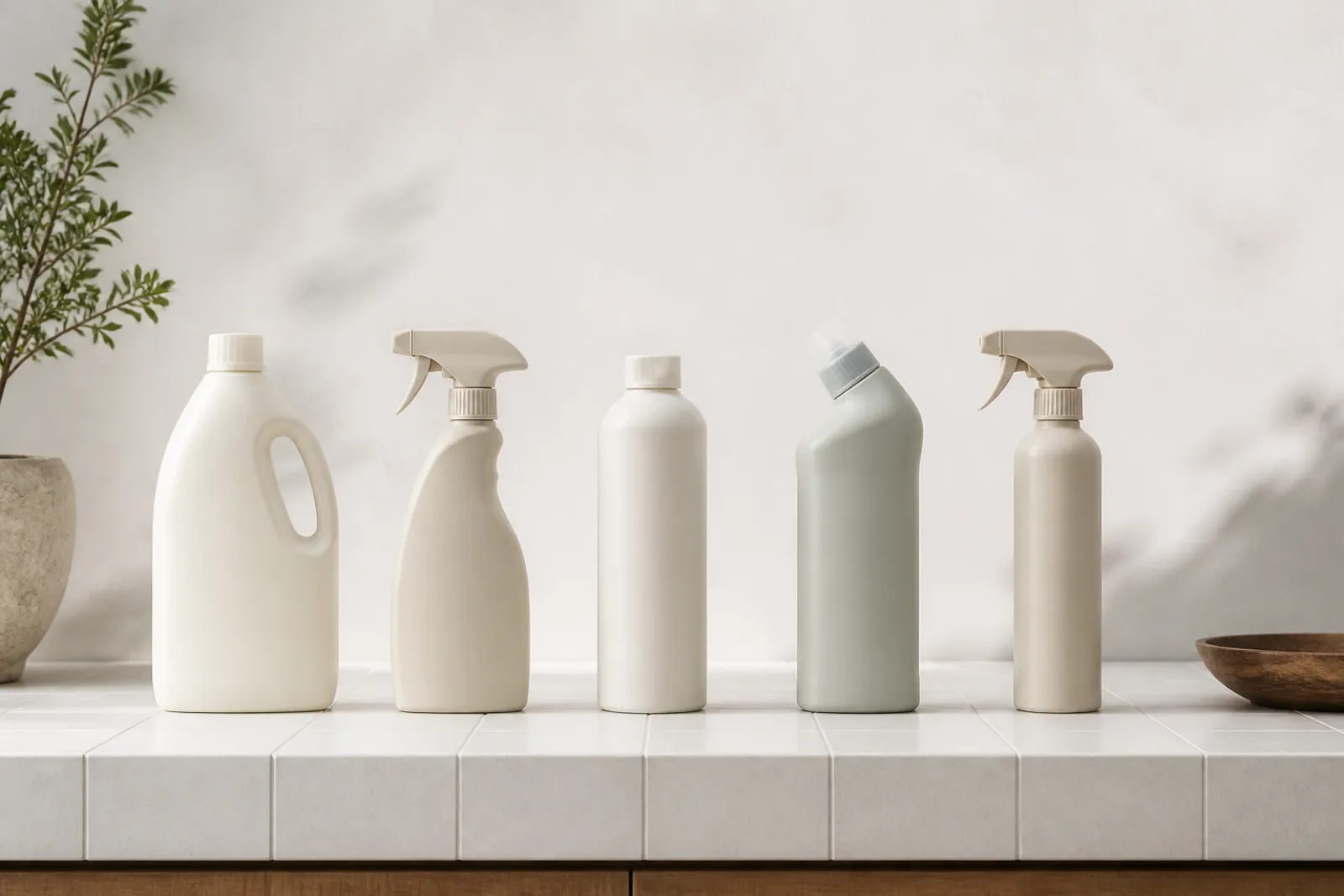
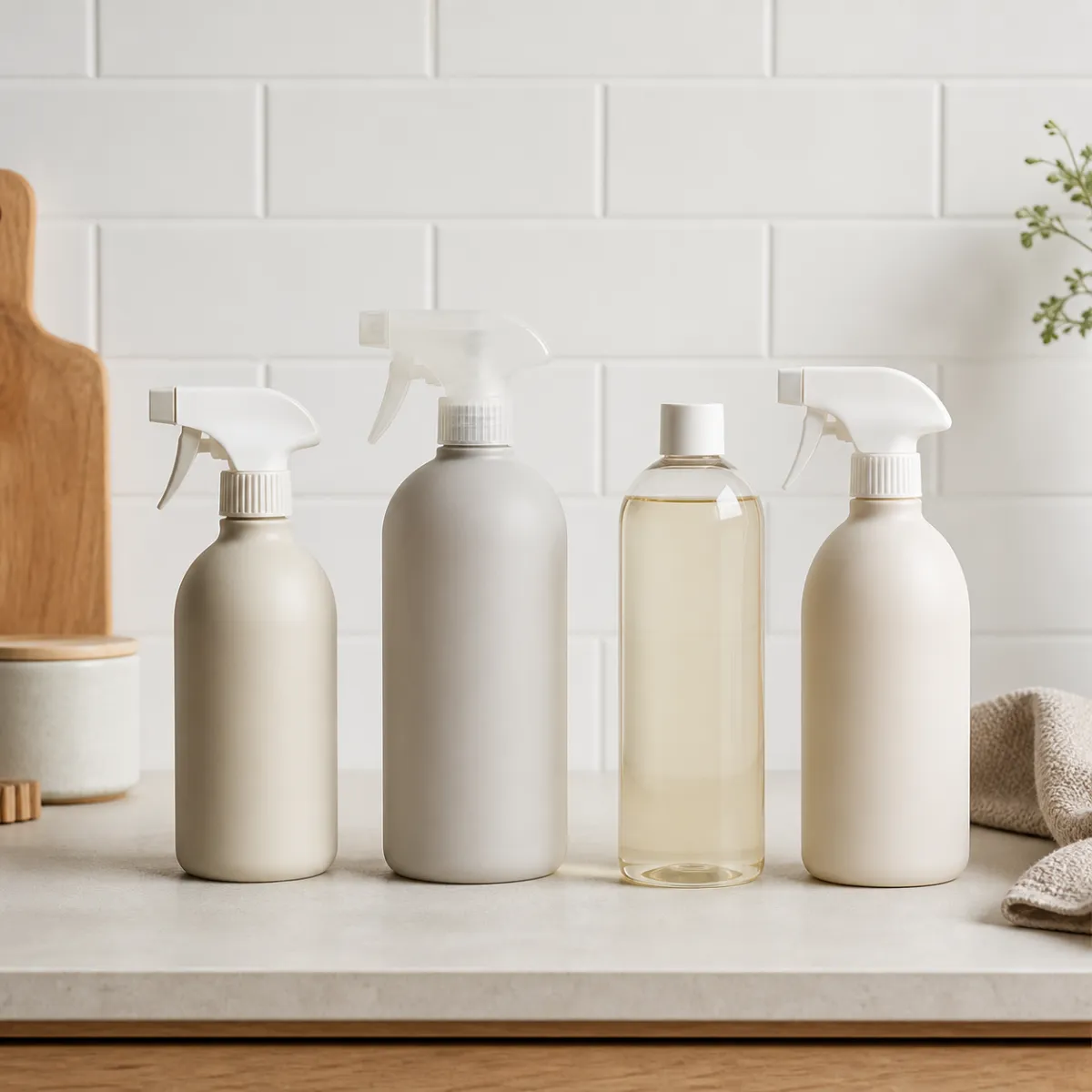
Four grout cleaner bottles lined up on a white tiled surface

Best Overall Grout Cleaner

Zep Grout Cleaner and Brightener

— for ordinary ceramic or porcelain floors with a few years of neglect behind them. Acidic formula, goes on wet, clings long enough to do most of the lifting before a brush ever touches the joint. On tired grey grout it pulls color back rather than just whitening the top layer, which is the difference between grout that looks washed and grout that looks replaced. One 32 oz trigger bottle covers a full bathroom.

  • Format Spray, acidic
  • Size 32 oz
  • Surface Not for stone

Pros

  • strong on old dirt and grime
  • real color recovery, not just cosmetic lightening
  • sprays onto vertical joints without running off

Cons

  • acidic, so it's a hard no on marble and travertine
  • wants gloves and an open window
Check price

Best Grout Cleaner on the Market for Budget Shoppers

Clorox Tilex Mold & Mildew Remover

— not sold as a grout product at all, which is exactly why it keeps beating specialized bottles on cost. If your problem is black speckling rather than embedded soil, a chlorine spray is the shortest route: spray, wait, rinse. Ask what the best grout cleaner on the market is for the money, and this is usually the honest answer.

  • Format Spray, chlorine
  • Surface Not for stone

Pros

  • cheapest way to whiten organic marks
  • almost no scrubbing on light jobs
  • stocked in every home improvement aisle

Cons

  • whitens the surface without removing what's underneath
  • unsafe on stone
  • the fumes are real
Check price

Best Grout Cleaner for Shower Grout

Black Diamond Ultimate Grout Cleaner

— built for what shower grout actually collects: soap scum, shampoo residue and mineral film layered on top of each other. Bleach-free and color-safe, so it suits grey or charcoal joints and won't strip a sealer on its way past. Handles the shower walls and bathroom floor in one pass.

  • Format Liquid, bleach-free
  • Size 32 fl oz
  • Surface Sealer-safe

Pros

  • safe on colored grout and on sealed surfaces
  • dissolves the film instead of masking it
  • low odor in a small closed room

Cons

  • slower than chlorine on heavy black mold
  • wants a second pass on badly neglected joints
Check price

Best Natural Grout Cleaner

Better Life Tub & Tile Cleaner

— plant-derived and fragrance-light, for houses with kids, pets, or anyone who reacts to chlorine fumes. It won't rescue five years of neglect, and we won't pretend it will. What it does well is regular cleaning: used every couple of weeks it stops the grey from ever setting in, and it's gentle enough for a kitchen backsplash.

  • Format Spray
  • Surface Broadly safe

Pros

  • no harsh fumes
  • fine around food prep
  • pleasant to use without a mask

Cons

  • needs longer contact time
  • not a rescue product
Check price

Four picks, live pricing — compare them side by side before you decide.

How We Chose the Best Grout Cleaner: Testing Methodology

No lab, no sponsorship, and no pretending otherwise. What we had was a real bathroom and a real kitchen, left alone long enough to get genuinely unpleasant, plus one rule: every product treated the same way. Transparency beats a paywalled score you can't inspect.

Dirty Grout Test Conditions

We stopped cleaning the grout in one bathroom for several weeks. That produced the layered mess most people actually face — hard-water film in the shower enclosure, greasy footprints on the floor, dark organic growth in the corners where water sits. The kitchen strip added a second problem, since cooking oil behaves nothing like bathroom grime and defeats products that handle a shower fine. Each cleaner got its own marked zone, so nothing borrowed credit from its neighbor.

Scoring Criteria for Grout Cleaning Performance

Four things decided the ranking. Lift with minimal effort — how much came away during dwell time, before any brush. Effort required afterwards, measured in honest arm work. Surface safety, checked against the label and against stone, sealed tile and colored joints. And durability: a result that looks brilliant on day one and grey again by the weekend scores badly.

We shot before/after on every zone, same light, same spot, and we're not publishing percentages we can't defend. What you get instead are criteria you can apply to any bottle on the shelf.

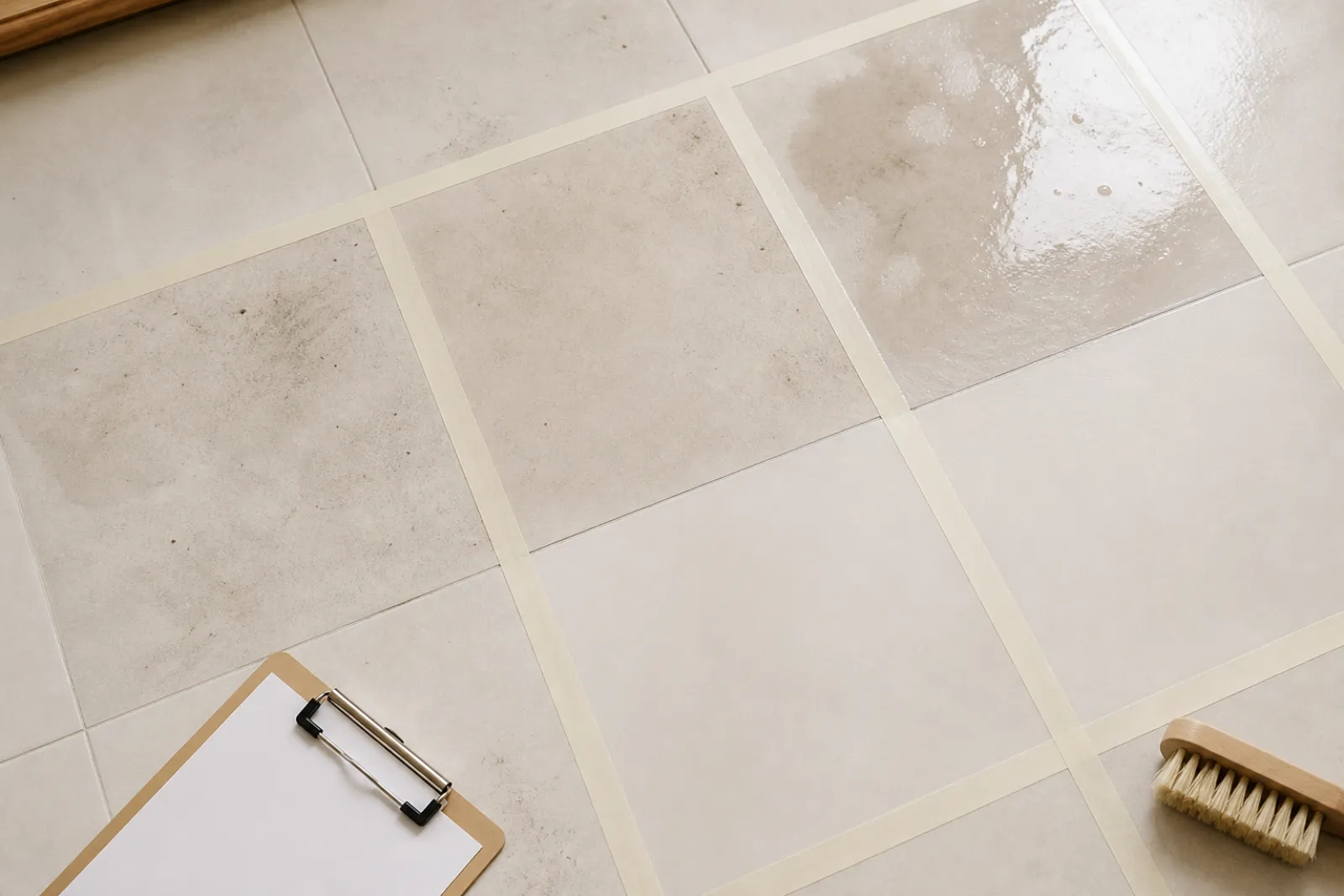
Test bathroom floor divided into marked zones for comparing grout cleaners

Grout Cleaner Buying Criteria: What to Look For

The label rarely tells you the thing that matters most: whether the formula suits your surface. Get that wrong and you don't get a disappointing clean, you get permanent etching.

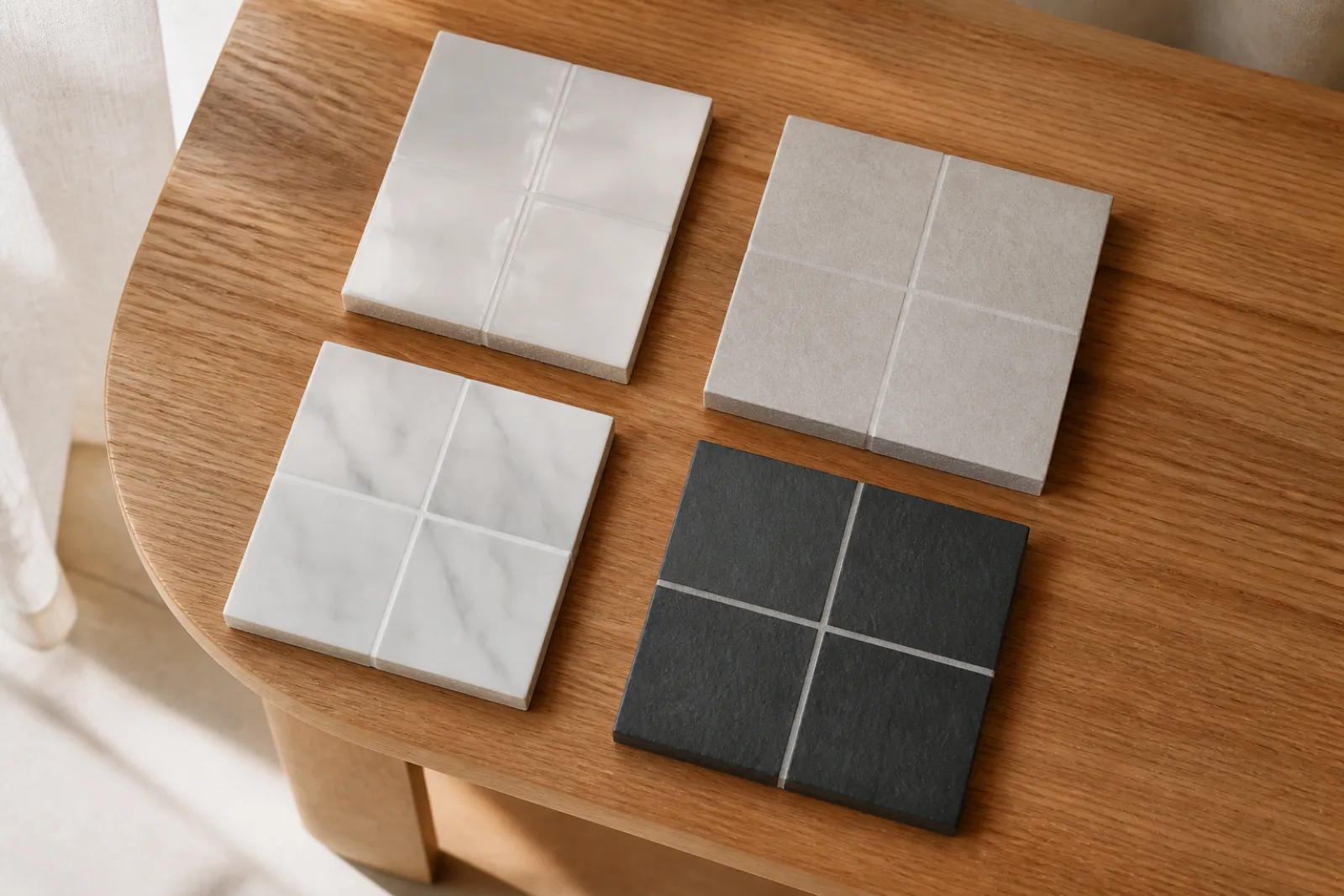
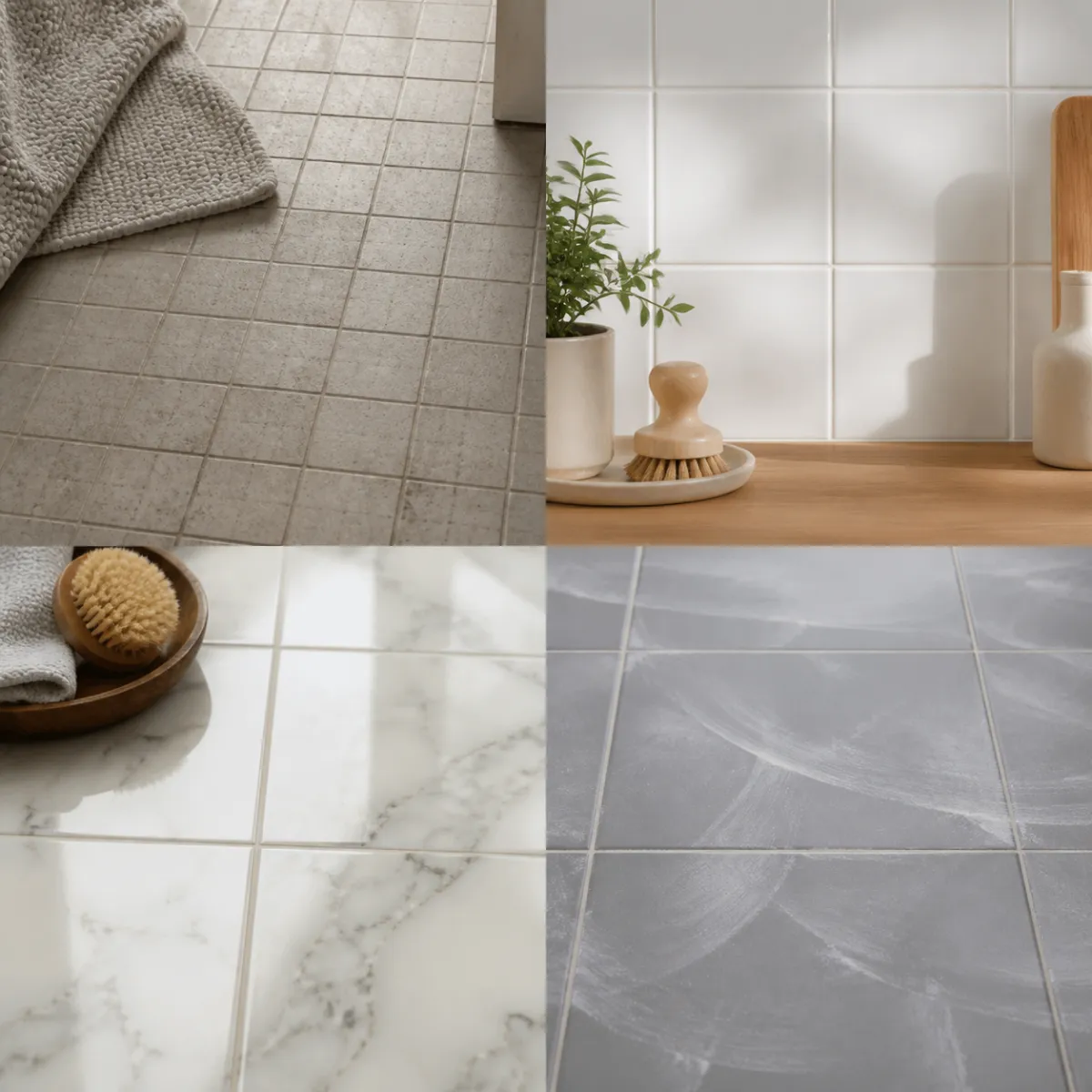
Samples of ceramic, porcelain, marble and slate tile with different grout joints
Check the tile first, the joint second.

Tile and Grout Surface Compatibility

Glazed ceramic and porcelain tolerate almost anything. Unglazed, terracotta and quarry tile absorb whatever you pour on them. Anything calcium-based — marble, limestone, travertine, some slate — reacts with acid on contact and dulls instantly. Check the tile first, the joint second. If you can't identify it, treat it as delicate and test behind the door.

Sanded vs Unsanded Grout

Sanded grout fills wide floor joints, has a rough open texture, and traps soil deep enough that spray-and-wipe never reaches it; it rewards a long dwell time and a stiff brush. Unsanded grout sits in narrow wall joints, is smoother, and scratches under anything aggressive. Epoxy grouts are the outlier — close to non-absorbent, so they stain far less, but a mark that does set needs a dedicated stain cleaner rather than more force.

Ingredients, Scent & Toxicity

Three families, three trade-offs. Chlorine products whiten organic marks fast, leave the dirt in place, and can't be mixed with anything. Acidic cleaners dissolve mineral deposits and restore color, at the cost of stone compatibility. Oxygen and enzyme cleaning solutions are the gentlest and the slowest. Heavy fragrance usually masks a harsh base, which in a small unventilated room is a comfort issue, not a preference.

Best Grout Cleaning Method for Natural Stone

On natural stone, the best grout cleaning method is a pH-neutral product and nothing else — the phrase to hunt for on the bottle is "safe for marble". Skip the acid, skip the chlorine, accept two gentle passes instead of one aggressive one. Stone is the one place where buying the correct product rather than the strongest one saves you a resurfacing bill.

Check price

Know your surface? Match it to a pick above and see today's price.

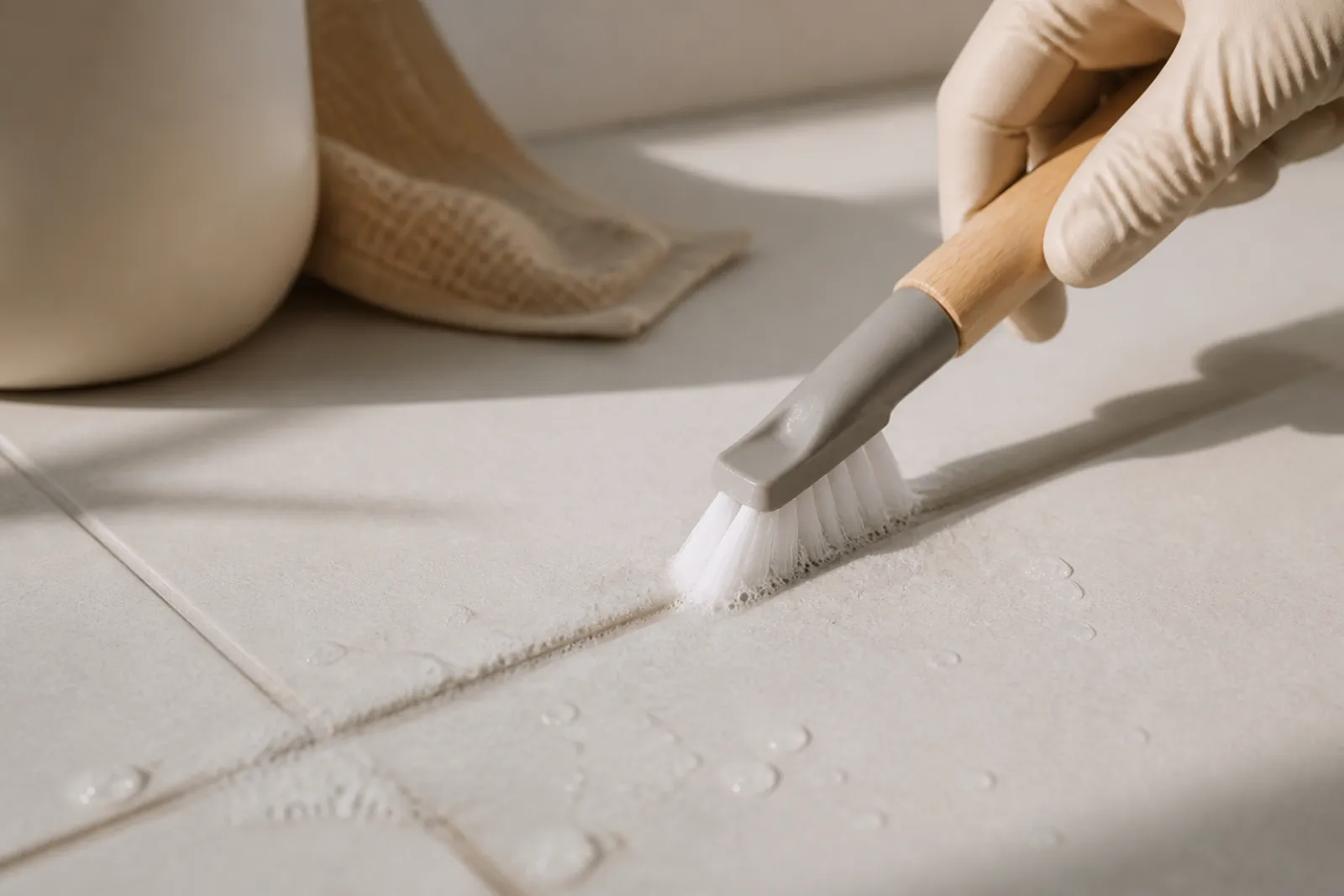
Gloved hand scrubbing a grout line with a narrow V-shaped brush

How to Clean Grout: Step-by-Step Method

Technique closes most of the gap between an average product and a great one. To clean grout properly, run this sequence with whichever bottle you picked.

  1. 1
    Sweep or vacuum first. Loose grit turns into abrasive slurry and scratches the glaze.
  2. 2
    Wet the joints with warm water. Damp grout takes the cleaner evenly; bone-dry grout swallows it and dries out before it works.
  3. 3
    Apply and wait. Five to ten minutes of dwell time does more than five minutes of muscle. Mist it again if the room is warm — never let it dry on the surface.
  4. 4
    Work along the line, not across it, in short strokes.
  5. 5
    Rinse thoroughly. Residue left behind attracts dirt faster than bare grout.
  6. 6
    Dry it down. A microfiber cloth over the tile stops water spots and keeps the result sharp.

Clean Grout with a Scrub Brush

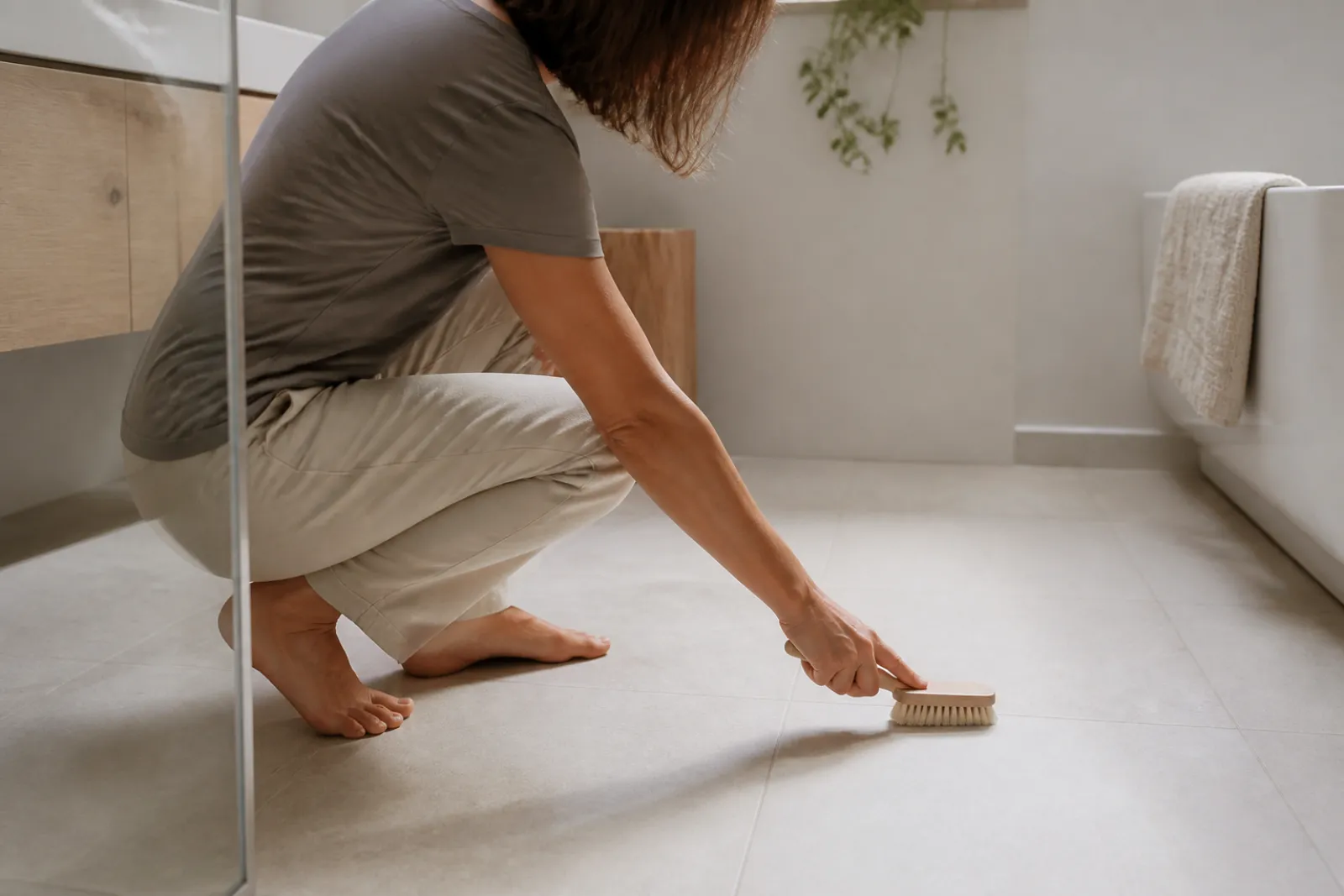
The tool matters as much as the chemistry. A narrow scrub brush with a V-shaped head sits down inside the joint instead of riding on the surface either side of it. Nylon bristles are the sweet spot: hard enough to bite, soft enough not to score. An old toothbrush is fine for one corner and hopeless for a floor. Keep the pressure moderate — grinding harder mostly wears the grout.

Grout Buildup Removal Tips

Old buildup usually isn't one substance, so one product rarely clears it. Start gentle and escalate only if you have to. For a stubborn crevice around a drain, apply the cleaner, cover the line with paper towel and re-wet it: the towel holds product against the joint for fifteen minutes instead of letting gravity win. Where gunk has gone rock-hard, a plastic grout saw lifts the crust off before you clean underneath it.

Toilet Bowl Cleaner for Grout: Does It Work?

Yes, and there's a reason it keeps going viral. A thick toilet bowl cleaner gel puts chlorine or acid into a clinging base designed to stay put on vertical porcelain, which is precisely what a grout joint needs. Squeeze it along the line, leave it, brush, rinse well.

Two honest caveats. It's off-label use, so no warranty covers you, and it ruins stone as fast as any other acid. It's also not a miracle grout cleaner: on greasy kitchen joints it underperforms a purpose-built product.

Watch the method

How to clean dirty grout — This Old House

DIY Grout Cleaner Recipes vs Commercial Grout Cleaners

Homemade options are cheap, safe and genuinely useful for upkeep. They lose badly on neglected joints, and pretending otherwise wastes an afternoon.

Homemade

Baking Soda Grout Cleaner Recipe

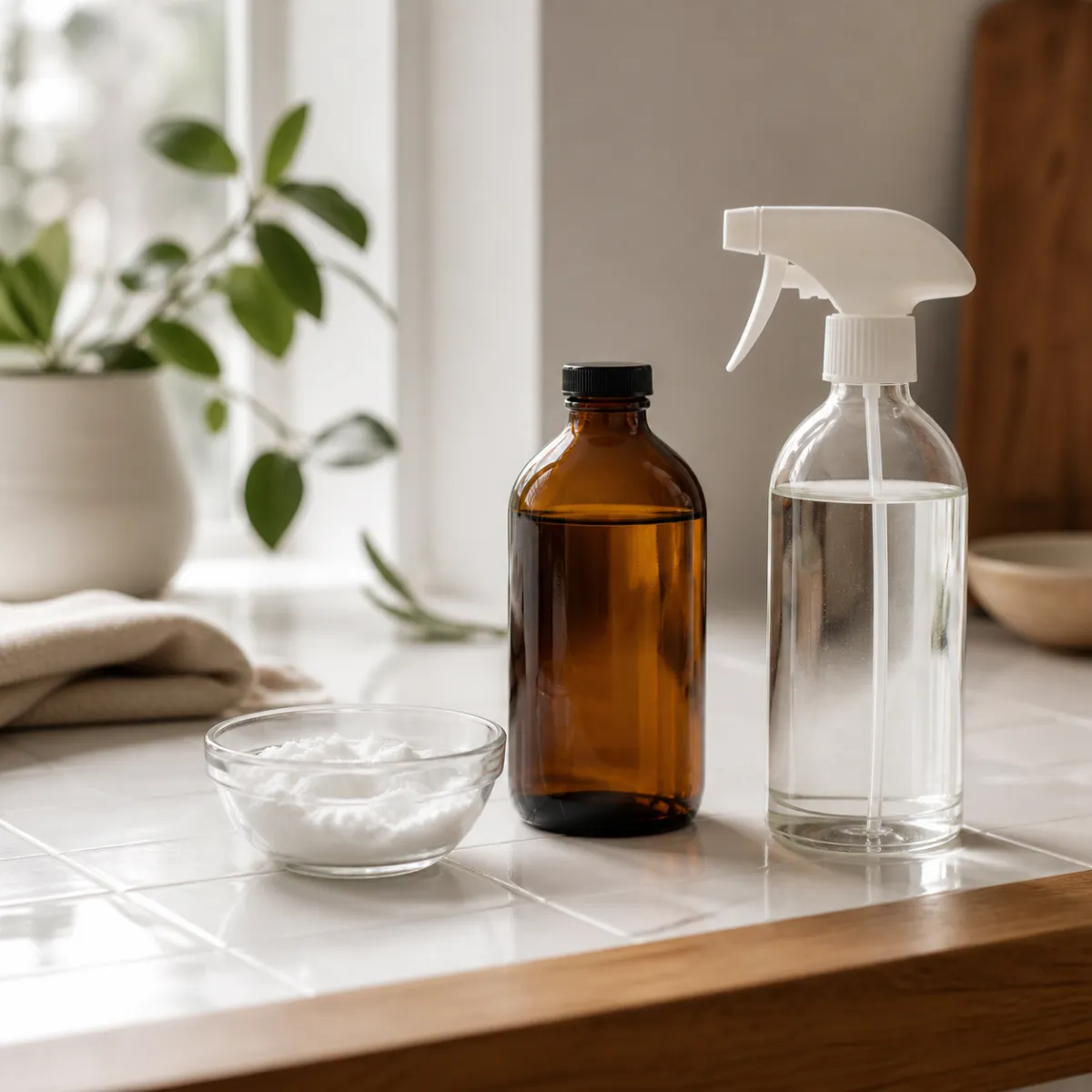
Mix baking soda with a little water to form a paste about the texture of toothpaste, press it into the joint, leave it fifteen minutes, brush, rinse. Sodium bicarbonate is a mild abrasive rather than a solvent, so it's excellent on light soil and safe on almost everything, stone included. It won't touch stubborn stains, and more paste doesn't change that.

Hydrogen Peroxide Grout Cleaner Recipe

Hydrogen peroxide and baking soda together is the strongest home mix worth making: the peroxide handles organic discoloration while the soda gives it grip. Slower and milder than a chlorine spray, and far kinder to colored joints and to your lungs — a fair choice for a small bathroom with a window that doesn't really open.

Baking soda paste and hydrogen peroxide next to a commercial grout cleaner bottle

Off limits

Bleach and Grout Cleaner Safety Warnings

Never combine bleach with vinegar, with an acidic cleaner, or with ammonia. Those mixes release toxic gas in the volume of air a bathroom actually holds. Never layer a chlorine spray over a home mix still sitting in the joint, either. And remember what chlorine does: it whitens the top of a mark without removing it, which is why treated joints go grey again so quickly.

Verdict: home recipes for upkeep, commercial tile and grout cleaners for rescue. If your joints are past the paste stage, the honest move is to buy the right product once.

Check price

Grout Cleaning Tools and Supply List

The kit is short: a stiff brush, gloves, eye protection, a spray bottle of water for re-wetting, paper towels, and something absorbent for the final wipe. Ventilation isn't optional — open the window before you start, not after your eyes sting.

Grout Cleaning Brush Types

Most failures come down to the wrong brush, and three shapes cover everything. A handheld V-brush for detail and shower joints. An extendable long-handle brush for floors, which saves your knees and lets you use body weight instead of wrist strength. A cordless spin scrubber with a narrow head for large areas, where it turns an hour of kneeling into fifteen minutes standing. Clean-eez and similar kits pair a brush with a matched cleaner, a sensible start if you own none of this.

Clorox Grout Cleaner Review

Clorox sells several sprays that end up on grout, and they don't behave the same. The bathroom formulas cling well to vertical joints and are strong on mold. The chlorine-free multi-purpose sprays are fine for weekly maintenance but won't shift set-in marks. None are stone-safe, and none remove soil so much as decolorize it — treat the range as a whitening tool, not a deep clean.

Best Cleaning Products for Grout Comparison

Lysol and other disinfecting cleaning products sanitize well, but disinfecting and de-staining are separate jobs. A purpose-built tile cleaning formula dwells longer and cuts through more. Buy for the job in front of you: sanitizing after illness, whitening for mold, or restoring color on a floor that's simply old.

Grout and Tile Cleaner Comparison Table

Five grout and tile cleaner bottles arranged for side-by-side comparison
Grout and tile cleaner comparison: format, best for, surface notes, size and today's price
ProductFormatBest forSurface notesSizeToday's price
Zep Grout Cleaner Spray, acidic Restoring grey floor joints Not for stone 32 oz Check price
Tilex Mold Remover Spray, chlorine Black mold, budget jobs Not for stone Check label Check price
Ultimate Grout Cleaner Liquid, bleach-free Shower joints, colored joints Sealer-safe 32 fl oz Check price
Better Life (plant-based) Spray Upkeep, low-fume homes Broadly safe Check label Check price
Toilet gel (off-label) Gel Vertical joints Not for stone Varies Check price

Price per Ounce Comparison

Bottle price on its own tells you almost nothing. Concentrates and thick gels go much further per ounce than ready-to-use sprays, and a cheap bottle you need three of is not cheap. The check takes ten seconds: open the listing, divide today's price by the volume on the label, then adjust for dilution. Run that across the rows above and the ranking usually shifts.

Best Grout Cleaner for Every Use Case

One answer each, consistent with everything above.

Best for Budget

Tilex, or a toilet gel you already own. Both cost little, both work fast on organic marks, and one bottle stretches across a lot of cleaning projects. The trade-off is honest: whitening now, soil still underneath.

Best for Natural and Eco-Friendly Cleaning

Better Life, with a soda paste in between. Slower, gentler, and the sensible default if the bathroom shares air with a bedroom.

Four different tiled surfaces representing budget, eco, marble and grout haze cases

Best for Marble and Natural Stone

A pH-neutral stone formula such as Mapei UltraCare, and nothing acidic, ever. Two mild passes beat one mistake you can't undo.

Best for Grout Haze

Grout haze — the cloudy film left behind after installation — isn't dirt and won't respond to a standard cleaner. It needs a dedicated haze remover, used inside the window the grout manufacturer specifies. A heavy-duty degreaser just wastes product.

Check price

Found your use case? See what that pick costs right now.

Grout Cleaner Safety and Surface Warnings

Bleach vs Natural Stone Safety

Chlorine and acid both attack calcium carbonate, so marble, limestone and travertine etch on contact: a dull rough patch that no cleaner removes. Sealing buys you minutes, not immunity. Unsure what your tile floor is made of? Drip water and a little vinegar somewhere hidden. Fizzing means calcium, and calcium means stone-safe products only.

What Not to Mix with Grout Cleaner

Never mix bleach with ammonia, vinegar or any caustic product — indoors, those gases are genuinely dangerous. Never stack two cleaners in one joint; rinse fully between them. Gloves on, window open, especially in high-traffic wet rooms where you'll be working close to the surface for a while. Skip steel wool and coarse pads too: they scratch glaze and leave iron particles that rust into fresh orange marks.

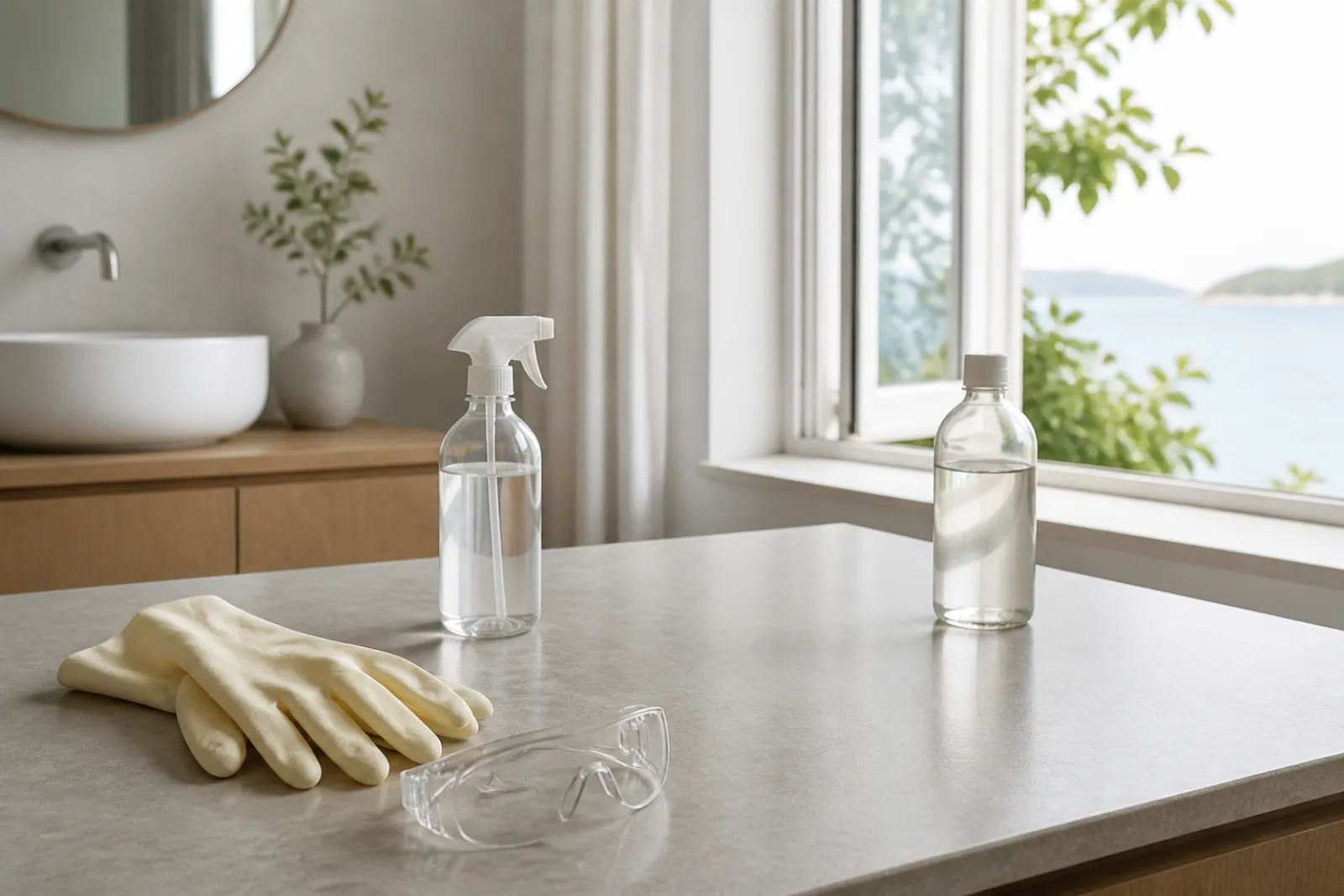
Warning setup showing gloves, open window and separated cleaning bottles
Cleaner bottles with volume labels visible for cost per ounce comparison

Grout Cleaner Price and Value Analysis

Cost per Ounce Comparison

Work it out per ounce, not per bottle. Take the live Amazon price, divide by the volume on the label, then halve that again if the product is a concentrate. A trigger spray is convenient, but you're partly paying to ship water; a concentrate is fiddlier and usually far better cost-per-ounce value across several rooms.

Budget vs Premium Grout Cleaners

Budget bottles do one thing competently, usually whitening. Mid-range adds surface safety and better dwell behavior. Premium and professional lines buy you color restoration and stone compatibility, which is worth it precisely once: when the alternative is regrouting. Match the tier to the damage rather than to the marketing, then check the current price before you decide.

Grout Cleaner FAQs

The questions readers actually send us, starting with some version of "how do I fix the grout on my bathroom tile?"

Person kneeling to inspect grout lines on a bathroom floor
What Is the Best Thing to Clean Grout With?

An acidic or oxygen-based product, a narrow stiff brush, and a proper dwell time. The chemistry loosens the soil; the brush only finishes the job. On stone, swap to pH-neutral and add a second pass.

How Do I Get My Grout White Again?

If it was white grout to begin with, a chlorine or oxygen product will restore it. If it's been grey for years, that color is soil soaked into the pores, so you need a restorative cleaner first and possibly a colorant after. Crumbling grout won't whiten at all — it needs replacing.

What Do Professionals Use to Clean Grout?

Alkaline degreasers or acidic restorers applied with a machine, plus steam or hot-water extraction. The chemistry isn't exotic; the pressure, heat and dwell control are. A cleaning expert also seals afterwards as routine, which is the step most homeowners skip.

What Cleans Grout Without Scrubbing?

A clinging gel or a foaming spray, left on long enough. Hit black mold with a chlorine product, wait, rinse, and the mark goes without contact. Embedded dirt is different — nothing removes it without some mechanical help, though a powered brush means the machine does the work instead of your arm.

How Often Should You Clean Grout?

Wipe wet areas weekly, give bathroom grout a thorough clean every one to three months depending on traffic, and reseal twice a year. A daily shower spray after the last shower of the morning does more for your joints than any rescue session.

What Should You Not Clean Grout With?

Steel wool, coarse pads, undiluted acid on stone, and any two products mixed together. Vinegar deserves its own warning: harmless on ceramic, quietly destructive on marble and on unsealed joints over time.

What Is the Best Grout Cleaning Brush?

A narrow nylon brush with a V or triangular head that drops into the joint. Add a long handle for floors and a spin head for large areas. Geometry matters more than brand here.

Are There DIY Grout Cleaner Options?

Yes, and they're worth using: soda paste for light soil, peroxide with soda for organic discoloration. Cheap, safe, easy. Neither rescues badly neglected joints, which is where a commercial tile cleaner earns its keep.

Can Grout Cleaner Be Used on Any Surface or Type of Grout?

No. Acid damages stone, chlorine damages stone and fades color, abrasives scratch polished glaze. Epoxy joints resist most cleaners and need a specialist product. Read the label, test in a hidden spot, and treat "all-purpose" as marketing.

Do You Need to Seal Grout After Cleaning It?

For cement-based joints, yes. Cleaning strips whatever protectant was there, and a fresh grout sealer keeps the surface clean longer by stopping liquids soaking in. Wait until it's fully dry — a day beats an hour — then seal your grout with a penetrating sealant. Epoxy doesn't need it, and the silicone caulk in the corners won't take sealer at all, so replace that rather than treat it.

Restored bright grout lines across a clean tiled bathroom floor

Get the Best Grout Cleaner for Your Home Today

Zep for tired floors, Tilex for mold on a budget, Black Diamond for showers, Better Life for gentle upkeep. Pick the one that matches your surface and your mess, then check price and availability on Amazon before you buy. Both move constantly, and today's listing is the only accurate one.

Amazon pricing changes daily. Open the live listing to see today's number.

Check price